You are invited to join the Scaling Coalition team for an interactive webinar exploring how we are uniting partners globally to address the collective scaling challenges that prevent proven agrifood innovations from reaching all those who need them most. Whether you are already engaged in the Coalition or learning about it for the first time, this session will provide practical insights on how to get involved.
Webinar Objectives
Understand the Scaling Coalition: A deeper dive into the objectives, functioning, and governance of the Coalition and how it drives sector-level coordination for scaling agrifood innovations in the Global South.
Engage with Solution Groups: Gain clarity on how to join the Coalition’s existing Solution Groups (such as “Data Interoperability” and “Capacity Sharing”) or propose and create new ones with other organisations.
Connect and Collaborate: Exchange ideas with fellow members of the Scaling Community of Practice (SCoP) working group on “Agriculture and Rural Development and Social Enterprises” and explore opportunities for making active, in-kind contributions to the Coalition.
About the Scaling Coalition
While much has been achieved in developing and disseminating agricultural innovations in the Global South, proven innovations too often remain isolated and fail to reach all the communities that need them. Scaling challenges are wicked problems that require action at the sectoral and system levels — no single organisation can solve them alone.
Founded in late 2024 by CGIAR, FAO, the Gates Foundation, GIZ, and the World Bank Group, the Scaling Coalition unites partners globally to co-create solutions to common scaling challenges. The Coalition is working to ensure that proven agrifood innovations reach those who need them and do so faster, more efficiently, and more cost-effectively.
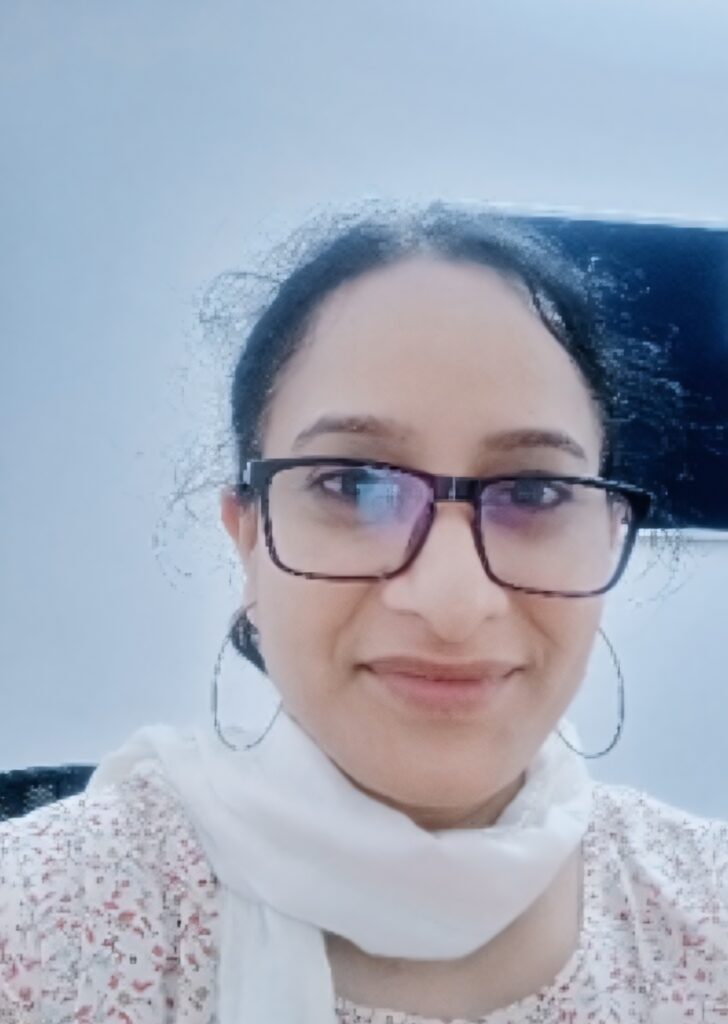
Anamika Priyadarshini
Associate Professor of Legal Practice & Director, Office of Grant Writing
O. P. Jindal Global University
Bio
Dr. Anamika Priyadarshini is a political economist specializing in gender & development. Her scholarship interrogates the intersections of development processes, gender relations, and social reproduction, with a focus on how these dynamics influence the everyday lives of last-mile communities, particularly women. With over two decades of experience as an academic and practitioner, she brings a distinctive perspective that bridges feminist political economy, critical development studies, and grounded field practice. Dr Priyadarshini holds a Master’s in International Development from Cornell University and a PhD in Global Gender and Sexuality Studies from the State University of New York at Buffalo. Dr Priyadarshini has taught courses on gender & development, women’s work, gender & migration, development theory, and research methodology at institutions such as SUNY Buffalo, Central University of South Bihar and Tata Institute of Social Sciences. She has also led research supported by the Indian Council of Social Science Research, the Gates Foundation, the World Bank, and other global and national institutions. Her teaching and research are grounded in feminist epistemologies, interdisciplinary inquiry, and a strong commitment to linking theory with praxis. A recipient of the Ford Foundation Fellowship and the Margaret McNamara Education Grant (MMEG), she has published in leading journals and volumes, including eClinical Medicine (The Lancet Discovery Science), Brill, and Social Change. She has been featured in MMEG’s series on Exceptional Women Building a Better World. and interviewed by eClinical Medicine for its podcast Renewed Call for Action: Collection on Gender Inequality.
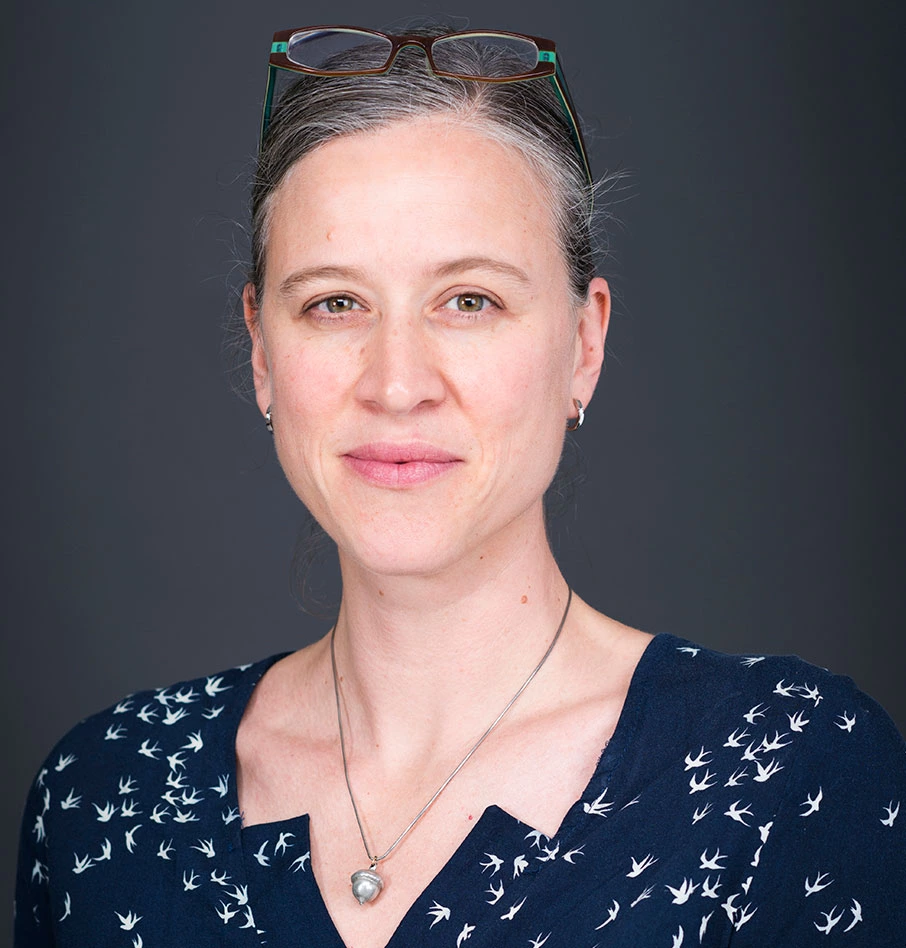
Loraine Ronchi
Global Lead for Scaling Knowledge and Innovation in Food and Agribusiness
World Bank Group
Bio
Loraine Ronchi is the World Bank Group’s Global Lead for Scaling Knowledge and Innovation in Agriculture and Food.
In this role, Loraine leads the effort to scale science and innovation into the WBG’s portfolio and into the evidence bases of policy dialogue. She comes to this role directly from a special assignment with the CGIAR, mandated by senior management to identify obstacles and solutions to more effective partnerships in science and innovation and greater integration of knowledge into WBG work with its Clients. Her technical focus was on climate action and nature, whilst building scaling strategies for WBG knowledge partnerships more widely. Returning to the WBG as Global Lead, Loraine is to take forward these strategies and recommendations within the framework of the WBG’s new Knowledge Compact.
Prior to taking on this pioneering role, Loraine was Practice Manager for Agriculture and Food in South Asia, overseeing teams and operations in 6 countries, including Afghanistan. Previous to management, she had led the Global Agribusiness team in the Finance, Competitiveness & Innovation (FCI) Global Practice. Always working across boundaries, she was the first WBG-wide Global Lead for Value Chains and Agribusiness and also served as technical lead for agribusiness in the IFC’s advisory services for three years. In her 20 years at the WBG, she has led programs, projects and policy dialogue on the agricultural sector from both headquarters and country office base in East Africa.
Prior to joining the WBG, Loraine worked on smallholder integration into markets in the coffee and cocoa sectors through research, impact evaluation, and technical assistance with private sector coffee and chocolate companies, as well as with civil society organizations in Fairtrade. A Rhodes scholar, she holds an MPhil in Economics from Oxford University, and her doctorate in Economics is from Sussex University in the U.K.

Marc Schut
Senior Advisor Innovation Portfolio Manager
CGIAR
Bio
Marc Schut (PhD) is a senior advisor innovation portfolio management who works in the CGIAR Office of the Chief Scientist. He also works as senior innovation and scaling scientist with Wageningen University. Marc is currently based in Belgium.
As senior advisor he supports the design and implementation of innovation portfolio management approach which form an integral part of the CGIAR performance and results management framework. Prior to his current position, Marc led the Flagship ‘Improved Livelihoods at Scale’ under the CGIAR Roots Tubers and Banana Program. He managed multi-cultural and inter-disciplinary innovation and scaling teams and managed multi-country, multi-partner, donor-funded programs. Marc has published over 50 scientific publications and has 15+ years of experience working in low- and middle-income countries.

Michael Duerr
Program Manager
GIZ
Bio
Michael Duerr is an agricultural economist by training and has been working in development cooperation throughout his career. Before returning to Germany to work at GIZ HQ, he was based in East Africa for a prolonged period of time. Michael Duerr currently heads SCALE, a German ODA-funded initiative providing support for scaling of agricultural innovations. Based on the conviction, that collaborative action is needed to achieve transformative, sectoral impact, he engaged with other founding members to establish the Scaling Coalition.

Esther Kihoro
Researcher, Science and Practice of Scaling
CGIAR
Bio
Esther Kihoro is a recognised researcher and scaling practitioner with over 15 years of experience in agriculture, gender, climate change, and rural development. Her work focuses on translating research into impact by strengthening systems, partnerships, and capacities for scaling innovations across agri-food systems in the Global South.
At the CGIAR Impact at Scale Platform hosted at ILRI, Esther leads the Scaling Fund, which supports innovation teams to design, test, and implement robust scaling strategies through targeted funding, technical backstopping, and learning. The Fund also serves as a living laboratory, generating empirical insights that feed into the Science of Scaling—advancing CGIAR’s understanding of how scaling can be achieved responsibly, inclusively, and efficiently.
Esther has been instrumental in building the Science and Practice of Scaling collaboration between CGIAR and Wageningen University, and in growing a vibrant science of scaling community within and beyond CGIAR. She fosters joint research, capacity development, and institutional learning, while mentoring the next generation of scaling experts. Her work also advises programs and partners on responsible scaling approaches, and she has led multi-country initiatives embedding scaling principles into research and innovation systems.
A strong advocate for systems thinking and co-learning, Esther’s work bridges research, policy, and practice—helping shape how scaling science informs global efforts toward sustainable agricultural transformation and impact at scale. She holds a PhD in Knowledge Technology and Innovations from Wageningen University and Research.
Presentations