This session explores Morocco’s experience building a government-led partnership with researchers to design, scale, and strengthen education reforms using evidence, monitoring, and evaluation. Focusing on the flagship Pioneer Schools program, the webinar highlights how the Ministry of Education embedded learning and evaluation into reform implementation, enabling evidence to directly inform policy decisions at scale.
A central element of this approach is the Morocco Innovation and Evaluation Lab, an embedded, government-facing lab hosted at Mohammed VI Polytechnic University, which bridges policymakers and researchers. Through this platform, evidence generation and adaptive learning are integrated into policy design and delivery, supporting real-time refinement as reforms scale nationwide.
Speakers will offer a deep dive into the practical journey of scaling reform across thousands of schools, sharing lessons on using M&E to improve implementation, balancing rigor with real-world constraints, and sustaining institutional commitment to evidence. Morocco’s experience provides a compelling example of how governments can lead evidence partnerships and use evaluation as a continuous tool for impact.
Morocco’s Pioneer Schools program demonstrates what government-led, evaluation-informed scaling can look like when the conditions are right. When the Ministry of Education launched the program in 2022, the starting point was sobering: national assessments showed fewer than 20% of students had mastered foundational skills, a gap deepened by the learning losses of the COVID-19 pandemic.
The Pioneer Schools program leveraged and Integrated an intensive remediation program before the start of the school year; structured pedagogy during the year, formative assessments and certifications for teachers and other stakeholders. Armed with impressive results from the evaluation of the pilot program in the first year of the program on learning outcomes, the program expand to more schools. The government also focused on adapting reforms to tackle challenges faced in middle schools, including issues of dropouts and social and emotional well-being of students. Over the following years, the program demonstrated that the right interventions could produce strong results and that building evaluation into the program design from the outset fundamentally changes how scale is achieved.
The panel brought together three experts closely engaged with the program: Andreas de Barros, Assistant Professor at the School of Education, University of California, Irvine and associated with J-PAL’s Morocco Innovation and Evaluation Lab; Imane Fahli, a senior public policy advisor; and Ghali Fikri, advisor and member of the Morocco Education department’s reform unit. They discussed how a strong commitment to concurrent evaluation allowed the program to learn and adapt as the program scaled year on year. There was a concerted focus on building a monitoring and evaluation culture beyond individual studies. Decision makers within government, advisors and researchers committed to engage for the longer-term and be flexible to timelines and constraints. This commitment to evaluation and learning enabled a unique opportunity to evaluate a composite of evidence-based interventions at scale, and the impact on learning at scale.
The results were striking, learning gains in Pioneer Schools more than tripled compared to control schools, with over half a standard deviation improvement across Arabic, French, science, and mathematics, and a 30% reduction in dropout rates. The middle school evaluation included the first large-scale assessment of social-emotional outcomes in a lower-income country.
The session’s Q&A drew out a less visible dimension of the story: the political economy of implementation. Bringing teachers on board required genuine buy-in through incentive structures, clear communication, and the kind of long-term, collaborative engagement between government decision-makers, advisors, and researchers that cannot be manufactured on a short project timeline. As John Floretta observed in closing: “the situation in Morocco shouldn’t be exceptional, but it is, and that is precisely why it matters.”
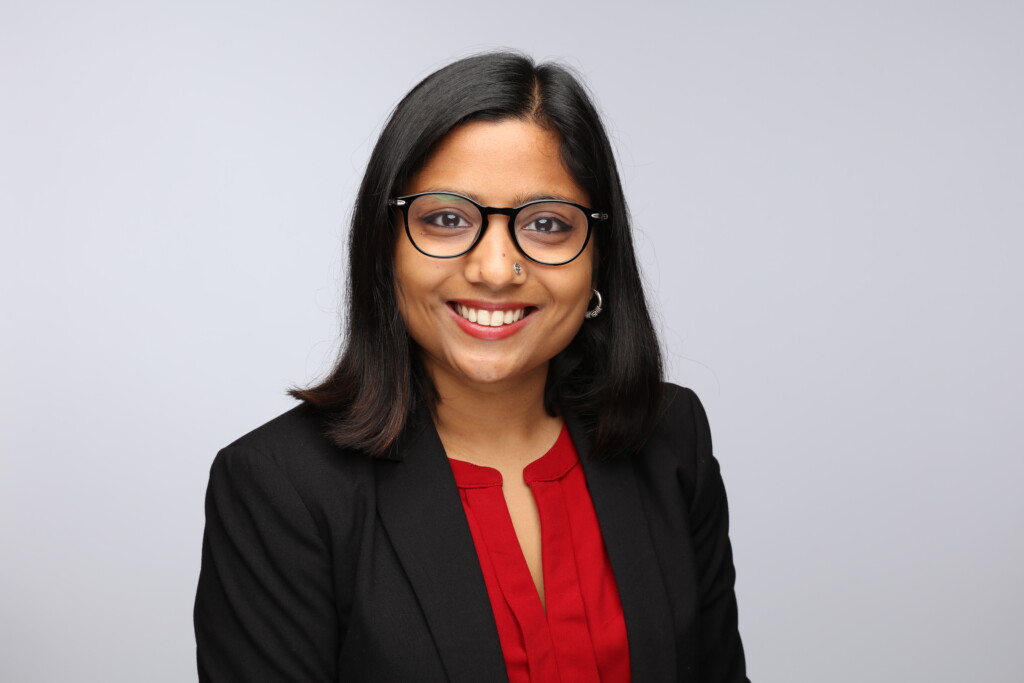
Rachna Nag Chowdhuri
Senior Impact Advisor
Bio
Rachna Nag Chowdhuri is the former Director of Impact at the Tony Blair Institute and Senior Vice President, Impact at the Global Innovation Fund. She led the work of GIF’s Grants and Impact functions. She has extensive experience in research, evaluation and evidence-based policy making across South Asia, South East Asia, Southern and West Africa. Her evaluation expertise is in social protection, gender, education and health. Rachna co-chairs the Scaling Up Community of Practice Monitoring and Evaluation Working Group.

Imane Fahli
Senior Public Policy Advisor
Bio
Imane Fahli is a Senior Public Policy Advisor. She works at the intersection of strategy, implementation, and impact, supporting complex reforms in the fields of education, employment, and economic development. Her experience spans the design and rollout of large-scale programs, the production and use of evidence, and the coordination of stakeholders with diverse priorities and constraints around shared objectives. Imane has worked on the reform as an advisor to the Government from the inception – and has a deep understanding of the research and policy landscape.
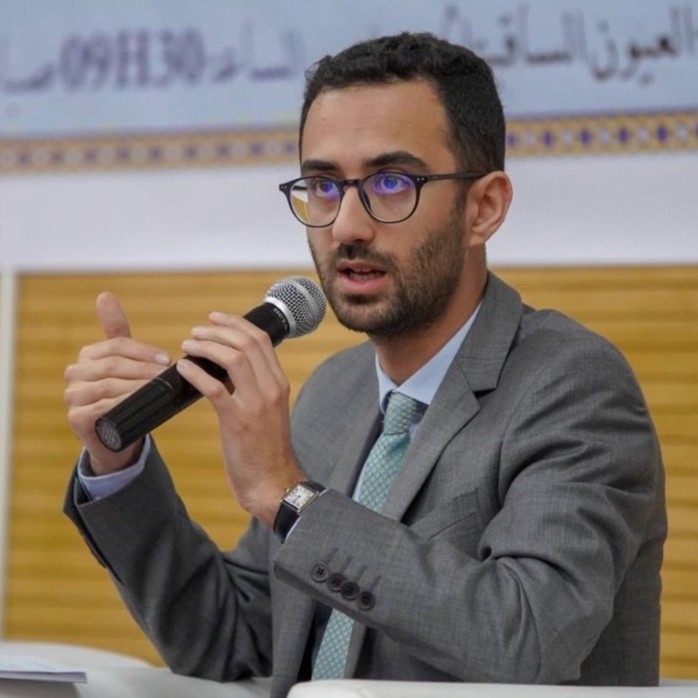
Ghali Fikri
Advisor
Ministry of Education, Morocco
Bio
For over 7 years, Ghali has worked with governments, public agencies, international organizations and philanthropic foundations on issues relating to social and economic development – in Morocco, sub-Saharan Africa and the Middle East. Before joining the Ministry of Education, Ghali was a consultant with Dalberg Advisors and then McKinsey & Company. He was also involved in the work of the Special Commission on the Development Model (CSMD) – notably on health and social protection reforms. Ghali brings to our discussion perspective on how reforms are implemented within the public sector, and how evidence can be embedded.

Andreas de Barros
Assistant Professor
UCI School of Education
Bio
Andreas de Barros who is an Assistant Professor in the School of Education at the University of California, Irvine (UCI). Andy’s research specializes in program evaluation and evidence-based education policy in low- and middle-income countries. Before joining UCI, he was a Postdoctoral Associate in the Department of Economics at the Massachusetts Institute of Technology (MIT), where he worked with the Abdul Latif Jameel Poverty Action Lab (J-PAL). Andy is a key research partner at the MEL – and is leading external evaluations of the Government’s education reforms.

John Floretta
Global Deputy Executive Director
J-PAL
Bio
John Floretta is the Global Deputy Executive Director J-PAL. He works with J-PAL’s Executive Director to set J-PAL’s strategic vision and collaborates closely with the leadership of the seven regional offices. He directs the Evidence to Scale vertical to accelerate J-PAL’s efforts in catalyzing the scale up of evidence-informed policies to reduce poverty. He also serves as Co-Chair of J-PAL’s Innovation in Government Initiative and works closely with J-PAL policy and training leadership. He is a board member of J-PAL and Teaching at the Right Level Africa and a member of the Scaling Up Community of Practice executive committee.
Presentations