MEMBER STORIES & STUDIES

The champagne is broken out when the project reaches the board. Nobody thinks about what happens after it ends.
In this interview, SCoP co-founder and senior advisor Johannes Linn reflects on decades of experience at the World Bank and beyond, arguing that lasting impact requires more than successful projects. He explores why transformational scaling depends on changing systems, institutions, and incentives so that solutions continue to grow long after individual initiatives end ...

Construire une architecture de la mise à l’échelle : nos productions, enseignements et perspectives – Étude de cas: STAT-C
La science de la mise à l’échelle continue d’évoluer, cependant, on sait encore peu de choses sur la mise à l’échelle spontanée, c’est-à-dire la façon dont une innovation se diffuse au-delà de son contexte initial sans stratégie formelle de mise à l’échelle. Cette étude examine la mise à l’échelle spontanée de STAT-C, un atelier de formation conçu pour soutenir la gestion des arrêts de travail liés aux troubles mentaux courants en soins primaires. À l’aide d’une étude de cas à méthodes mixtes, les autrices et auteurs ont exploré comment cette innovation s’est déployée dans des conditions réelles de pratique. Les ...
Building a Scaling Architecture: Our Outputs, Lessons, and Perspectives – Case Study: STAT-C
Although scaling science continues to evolve, little is known about spontaneous scaling, namely how innovations spread beyond their original setting without a formal scaling strategy. This study examines the spontaneous scaling of STAT-C, a training workshop designed to support the management of sick leave related to common mental health disorders in primary care. Using a mixed-methods case study, the authors explored how the innovation expanded under real-world conditions. Findings highlight key factors that supported its spread, the challenges encountered, and the ethical and practical considerations involved. The study contributes to a growing understanding of spontaneous scaling and offers valuable lessons ...

Practical Uses of AI for Research and Policy Analysis
A key challenge of the Information Age is making the information that already exists useful. Too much information can be as much of a problem as too little, especially when what exists is not accessible, digestible, or actionable. At the Scaling Community of Practice (SCoP), the problem is particularly acute because we draw on the experience of more than 5,000 members but our secretariat is fewer than ten people, none of them full time. We explored whether artificial intelligence (AI), specifically large language models (LLMs), can help us distil what our community knows without sacrificing accuracy. We are still early in gathering ...

Planting the Seeds of Scale: Lessons from Tunisia’s Dual Entry Point experiment
How a research-for-development project in semi-arid Tunisia is showing that lasting agroecological transformation can be achieved in just 18 months if you co-design for it. A persistent gap remains in agricultural development between the knowledge produced by research and the practical experience of farmers. Technologies are disseminated, projects are terminated and minor alterations are observed, but farmer’s everyday realities do not meaningfully change. The fundamental question that underpins a significant proportion of the most rigorous research in the domain of Agricultural Research for Development (AR4D) does not pertain to the feasibility of transformation, but rather to the strategic design of ...

Governing climate action? How country platforms could enable inclusive and effective climate impact at national scale
Despite increasing prioritization, resources, and efforts, climate action is still not achieving transformational impact at scale. Many efforts remain fragmented, stuck in pilots and other are bounded projects that do not shift the systems which shape the causes and consequences of climate change. Country platforms have been proposed as a potential approach to bring more strategic coherence to climate action at national scale. This is a potentially critical step towards transformational scaling. The Just Energy Transition Partnerships (JETPs) in Indonesia, Senegal, South Africa and Vietnam were seen as ways to push forward ambitious climate actions with more aligned donor support ...
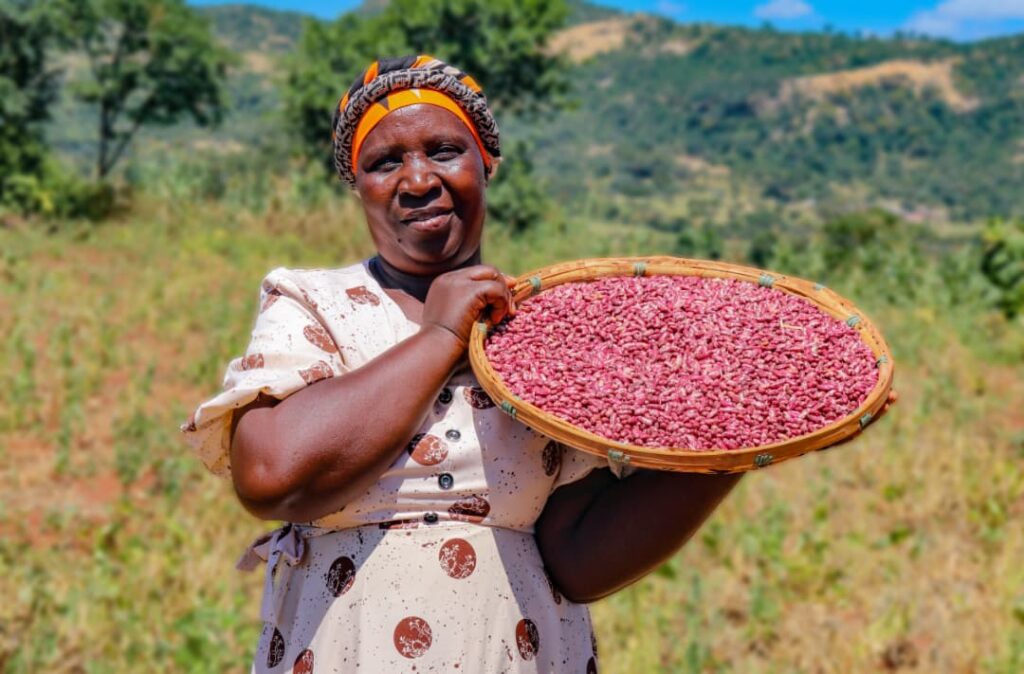
From zero to 41 percent: scaling iron bean in Zimbabwe
Zimbabwe faces a significant burden of micronutrient deficiencies, particularly iron deficiency. Approximately 72 percent of children aged 6–59 months and 61 percent of women of reproductive age are affected by iron deficiency. Recognizing the need for sustainable, food-based approaches, the Government of Zimbabwe adopted biofortification as one of its key strategies to improve nutritional outcomes. As part of efforts to address these challenges, Zimbabwe’s Crop Breeding Institute (CBI) released its first iron-biofortified bean variety, NUA45, in 2010. This large, red-mottled bean differed from the cream-colored conventional sugar beans that dominated local markets. Initially, farmers were uncertain and consumers were hesitant ...
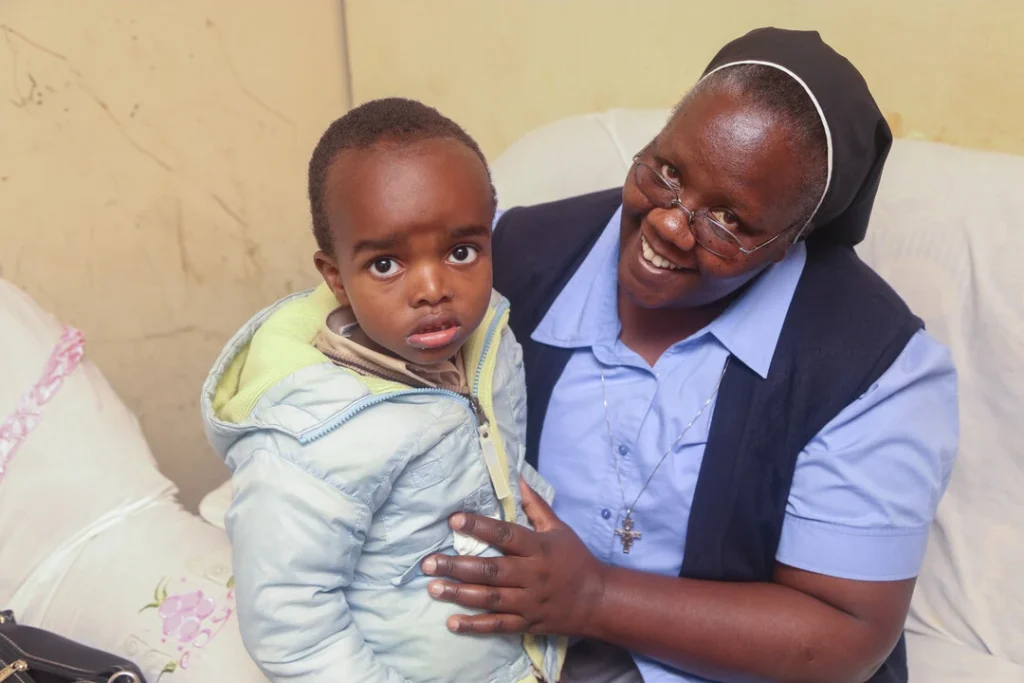
Sisters supporting sisters: scaling community-led care for children and families
Across five countries, Kenya, Ghana, Malawi, Tanzania and Zambia, the Strengthening the Capacity of Women Religious in Early Childhood Development (SCORE) initiative (funded by Conrad N. Hilton Foundation from 2025-2028) is demonstrating what it looks like to create lasting change at scale by bringing together community leadership, government systems strengthening, and direct service delivery. In many of the communities where SCORE works, faith groups are seen as critical social service providers. Catholic Sisters are often the first point of contact for families in crisis, positioning them as trusted, locally rooted leaders who live and work alongside the communities they serve ...
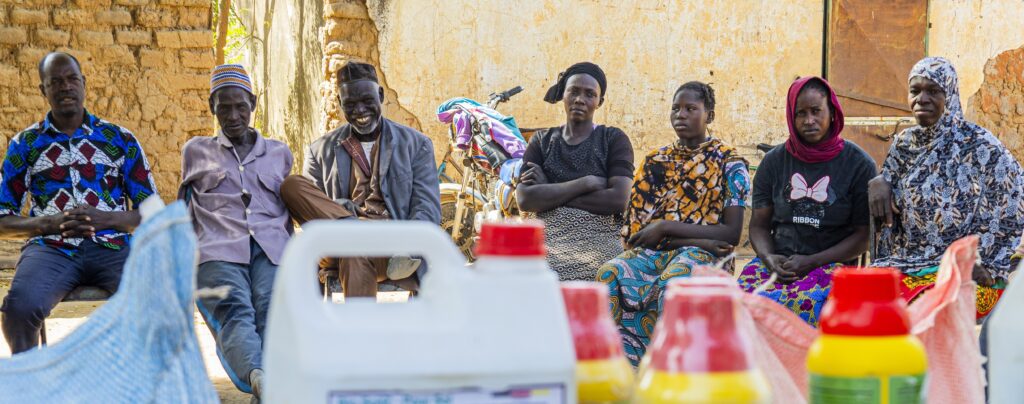
Scaling market-based solutions for last-mile agricultural access in West Africa
For decades, the “last-mile” agricultural challenge in West Africa has been framed as a problem of poor infrastructure or farmer poverty. However, research conducted by the Village Input Fair Fund (VIFF) suggests a more structural diagnosis: a timing mismatch and a coordination failure could prevent rural markets from functioning. Farmers typically have liquidity immediately following the harvest, yet they are often forced to wait until the planting season, when cash is scarce, to purchase seeds and fertilizers. Simultaneously, private agro-dealers view remote villages as risky, high-cost environments, lacking the reliable demand signaling necessary to justify the journey. Our innovation, the ...

Construire une architecture de la mise à l’échelle : nos productions, enseignements et perspectives
RésuméAu cours des dernières années, notre équipe pluridisciplinaire a constitué un portefeuille de travaux visant à rendre la mise à l’échelle plus structurée, responsable et équitable. Ancré dans des données probantes issues d’études empiriques et de revues, ce portefeuille a conduit au développement d’outils, à la mise à l’échelle d’innovations, à des activités de formation et à des initiatives de mobilisation des connaissances. Ensemble, ces contributions cherchent à renforcer les capacités systémiques nécessaires à une mise à l’échelle rigoureuse.Présentation de l’équipeBased in Québec, the francophone province of Canada, our team brings together members from the Chair in Shared Decision Making ...
