A solution that does not match the scale of the problem it seeks to address will not solve it. Across the development sector, there is growing recognition that meaningful scale requires solutions that are not just effective, but embedded and sustained within government and other systems long term.
As this understanding has taken hold, a nuanced set of questions has emerged. What does it actually mean to design solutions that can be adopted and scaled by governments, markets, or other system actors? How should organizations balance effectiveness, affordability, and simplicity when designing for scale? What roles should different actors – INGOs, social enterprises, and funders – play in enabling solutions to thrive without relying on philanthropy for the long-run?
While frameworks and theories on scaling are well developed, translating these ideas into operational choices remains complex. Organizations are grappling with how to adapt their models, build new capabilities, and make strategic decisions about what to do or not, in pursuit of long-term, self-sustaining impact.
This webinar brings together leaders from three distinct organizations – a major donor, an early-stage funder of social enterprises, and an INGO – to explore how these shifts are playing out in practice. Drawing on real-world examples and organizational experience, panelists will reflect on the implications of designing for scale and sustained delivery from the start: how this changes the way interventions are conceived, how partnerships are formed, and how success is defined.
Abe Grindle
Director, Programs
Co-Impact
Bio
Abe is a Director, Programs at Co-Impact. His career has focused the question of how to create enduring improvements at scale that result in better lives and equity for many millions of people. At Co-Impact, which he helped launch, he built and manages a $100M portfolio of grants working towards this goal, and Abe also leads Co-Impact’s capacity building and strategy development supports for its grantees (https://systemschange.co-impact.org/). Previously, Abe worked at the Bridgespan Group, where he supported dozens of social change leaders and funders in the US and around the world. There, among other things, he co-authored “Audacious Philanthropy” in Harvard Business Review, a study of 15 successful “change at scale” efforts around the world, and the lessons and patterns from them: https://hbr.org/2017/09/audacious-philanthropy.
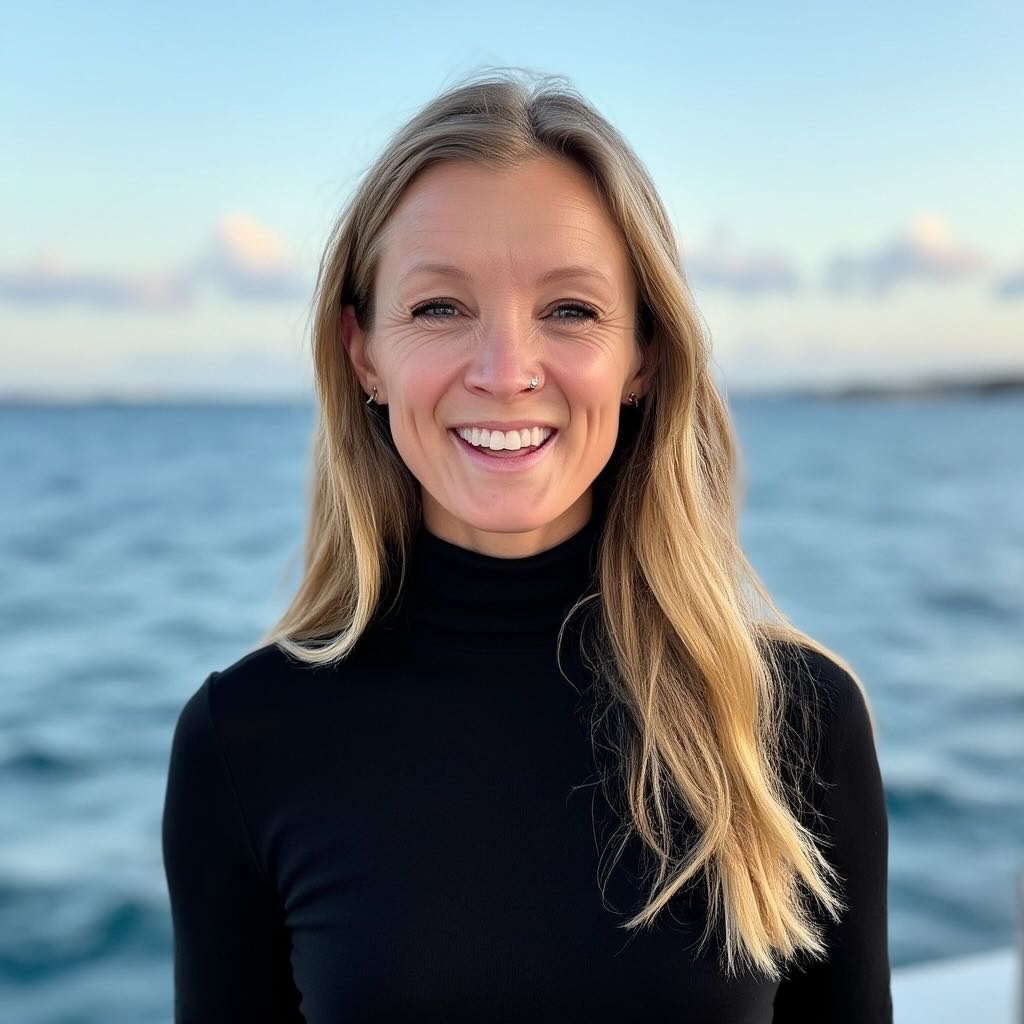
Avery Bang
Partner & Head of Fellowships
Mulago Foundation
Bio
Avery Bang is a Partner at Mulago Foundation, where she leads the work of finding and backing the next generation of social entrepreneurs tackling the world’s hardest climate, conservation, and development problems. She came to the role from 15 years as founder and CEO of Fika, where she raised $65M, built government partnerships across 20+ countries, and developed the AI mapping tools that help governments identify and fix rural infrastructure gaps at national scale. At Oxford, she ran Europe’s largest student-led fund as Managing Director of the Oxford Seed Fund and led sourcing and screening for the Skoll Venture Awards, where she developed a serious eye for early-stage founders with outsized potential. At Mulago, she has reviewed 15,000+ early-stage social ventures and developed sharp pattern recognition for what makes an idea technically credible and a problem space worth betting on. She is a Mulago Fellow herself.
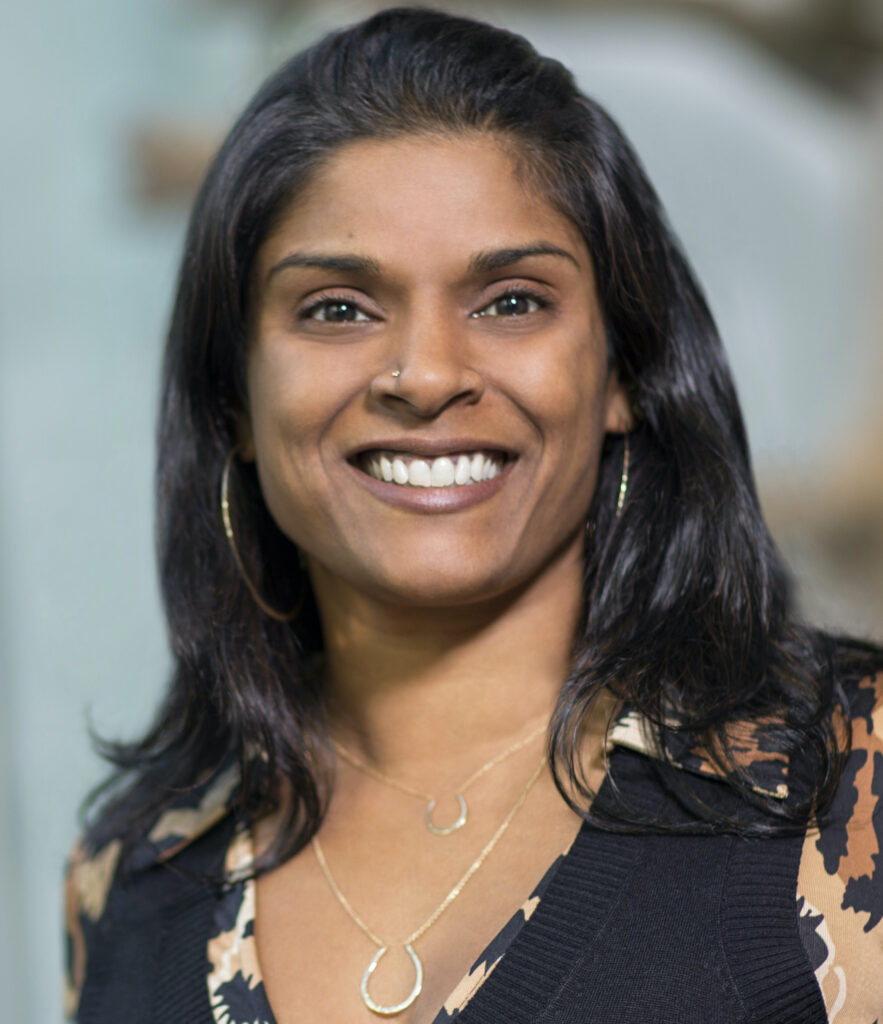
Anita Sundari Akella
Director for Impact at Scale
CARE
Bio
Anita Sundari Akella is Director for Impact at Scale at CARE. She leads the organization’s strategic practice area on sustainable scale, focusing on the foundational challenge of moving beyond project-based pilots to lasting impact for millions of people. At CARE, she helps technical teams design for scale and advises country offices on building local system ownership for scaling proven solutions. Previously, she worked at the intersection of economics and biodiversity conservation, launched the US’ first Business Design master’s program at the Savannah College of Art and Design, and strengthened artisan livelihoods and market access across the Global South as inaugural Director of Product and Partner Development at The Citizenry. Her experience across conservation, livelihoods, business design, and social enterprise has shaped her perspective on what it takes for effective solutions to spread and endure.
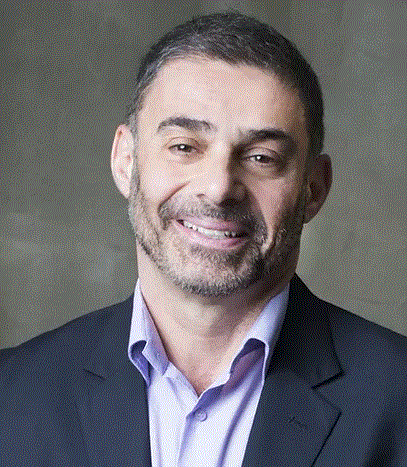
Richard Kohl
Co-Founder & Co-Chair
The Scaling Community of Practice
Bio
Dr. Richard Kohl is an independent consultant specializing in scaling up promising and proven innovations and programs in international development. He has worked extensively in Africa, Asia and Central and Eastern Europe, particularly in agri-food systems, early childhood development, global health and women’s and girls’ empowerment. He has written and published extensively on scaling, including several papers for the Scaling COP on Scaling and Systems and Scaling Principles. He is the co-leader of the SCoP’s Mainstreaming Scaling initiative, and has in that context has written case studies of the CGIAR, GIZ, and African Development Bank (forthcoming). Richard previously worked for Management Systems International, the OECD Development Center and the US Dept of State. Dr. Kohl lives in Portland OR.
Presentations
Designing for Scale
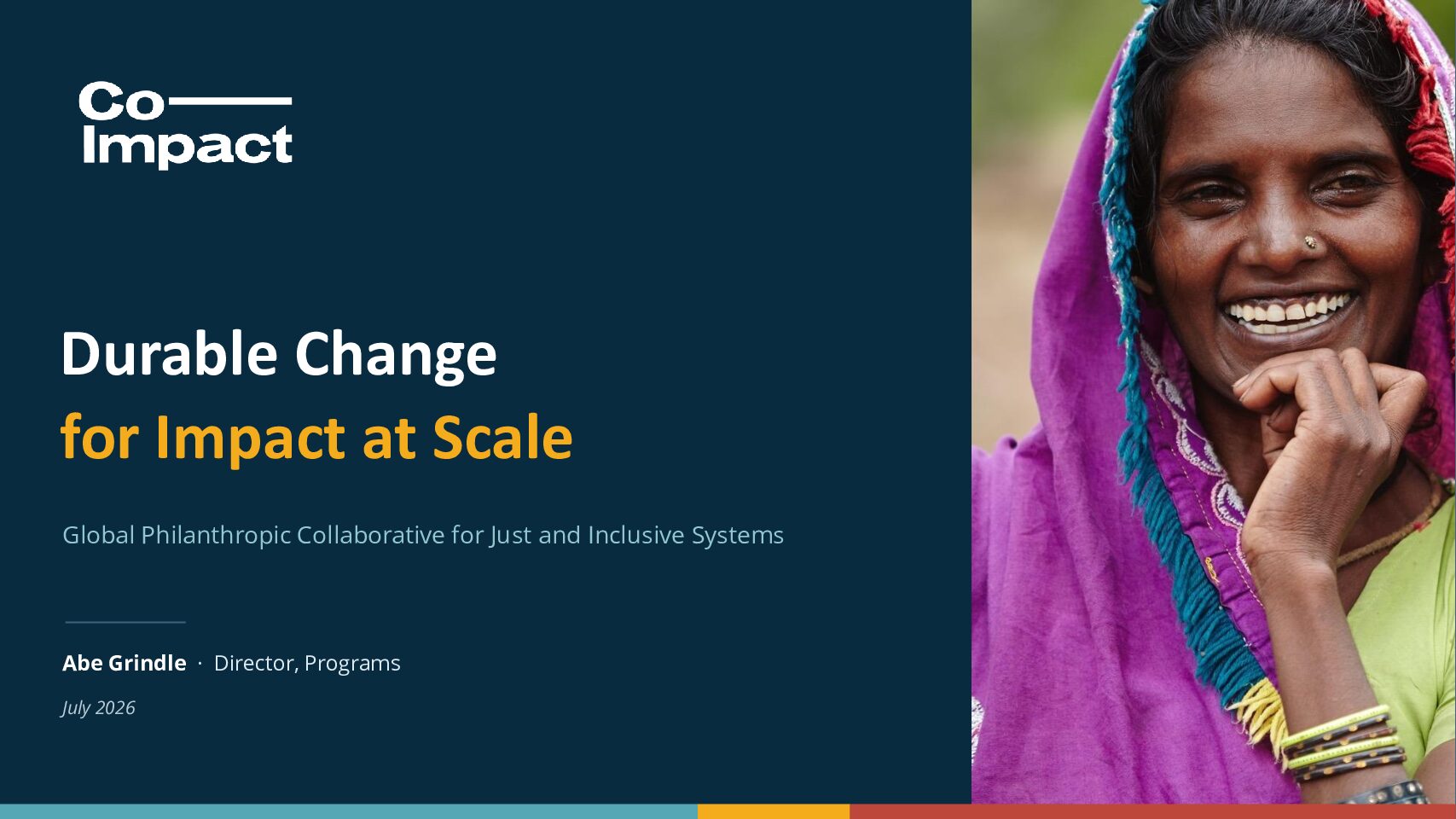
Durable Change for Impact at Scale – Global Philanthropic Collaborative for Just and Inclusive Systems
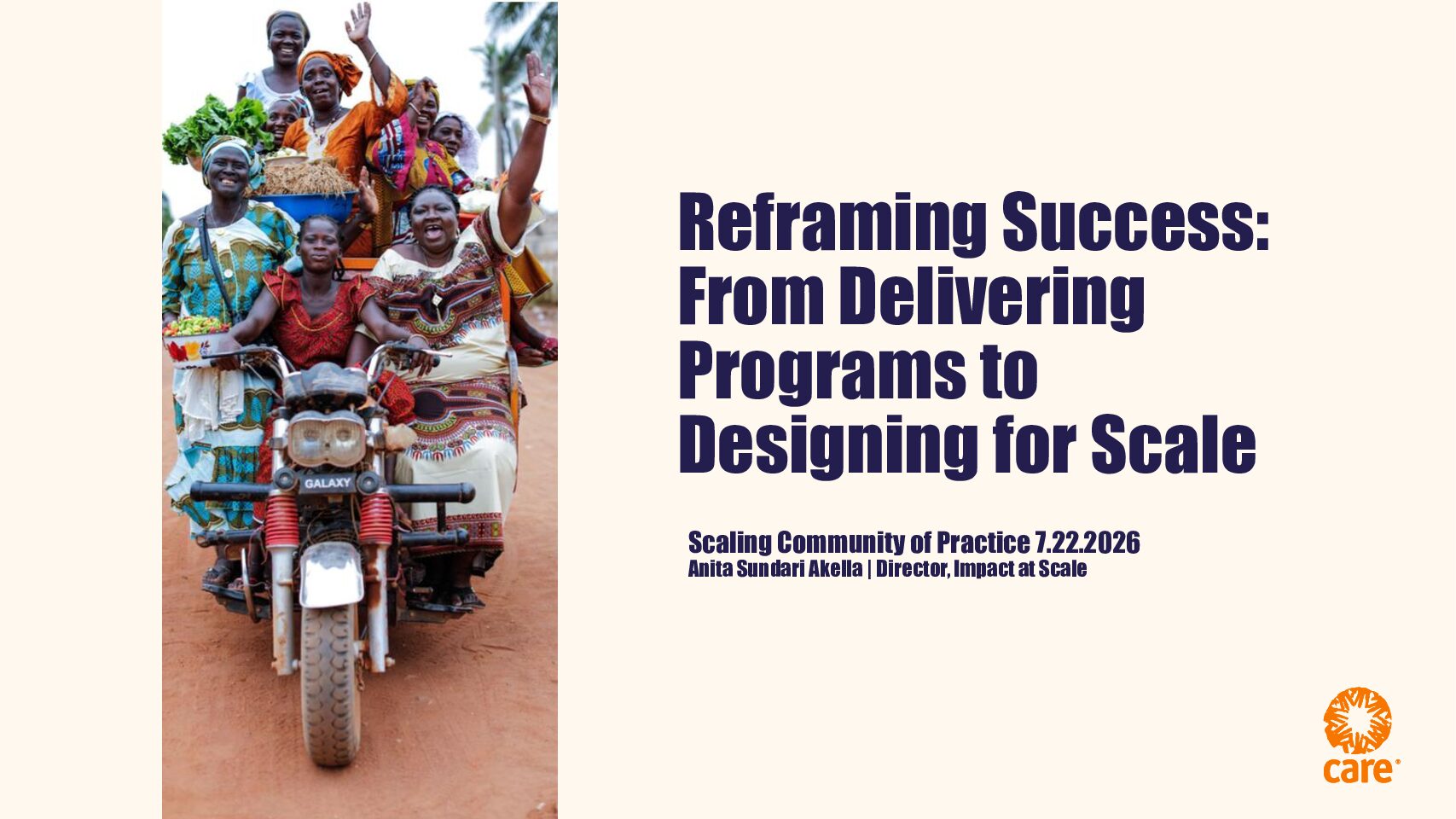
Reframing Success – From Delivering Programs to Designing for Scale (Akella)
Relevant Links
- The Bridgespan Group and Harvard Business Review: Audacious Philanthropy and 15 case studies
- Kevin Starr: Scale Really Matters
- Rakesh Rajani and Tim Hanstad: Helping NGOs and Funders Make the ‘Big Shift’ to Working With Government
- Ashleigh Morrell of TaRL Africa: Scaling Across Borders by Cocreating With Government
- Spring Impact: Scaling with Government: Key Lessons for mission-driven organisations
- Dr. Nithya Ramanathan et al: Scale That Lasts
- Co-Impact: Journey of CHANGING SYSTEMS
- Jeff Bradach: From Scaling Impact to Impact at Scale
- Sally Osberg and Roger Martin, “Getting Beyond Better”
- Alice Gugelev and Andrew Stern, “What’s your Endgame?”
- Dana Schmidt: How Echidna Approaches Scaling Impact