Founded in 2000 on the belief that World Change Starts with Educated Children®, Room to Read develops children’s foundational literacy skills, as well as life skills that promote gender equality across 29 countries, with more than 60 million children cumulatively benefitted through our literacy and gender equality programming as of Dec 2025. Across a portfolio of over 15 countries, Room to Read has demonstrated an evidence-based approach to enhance foundational literacy among early grade children through a combination of a ...
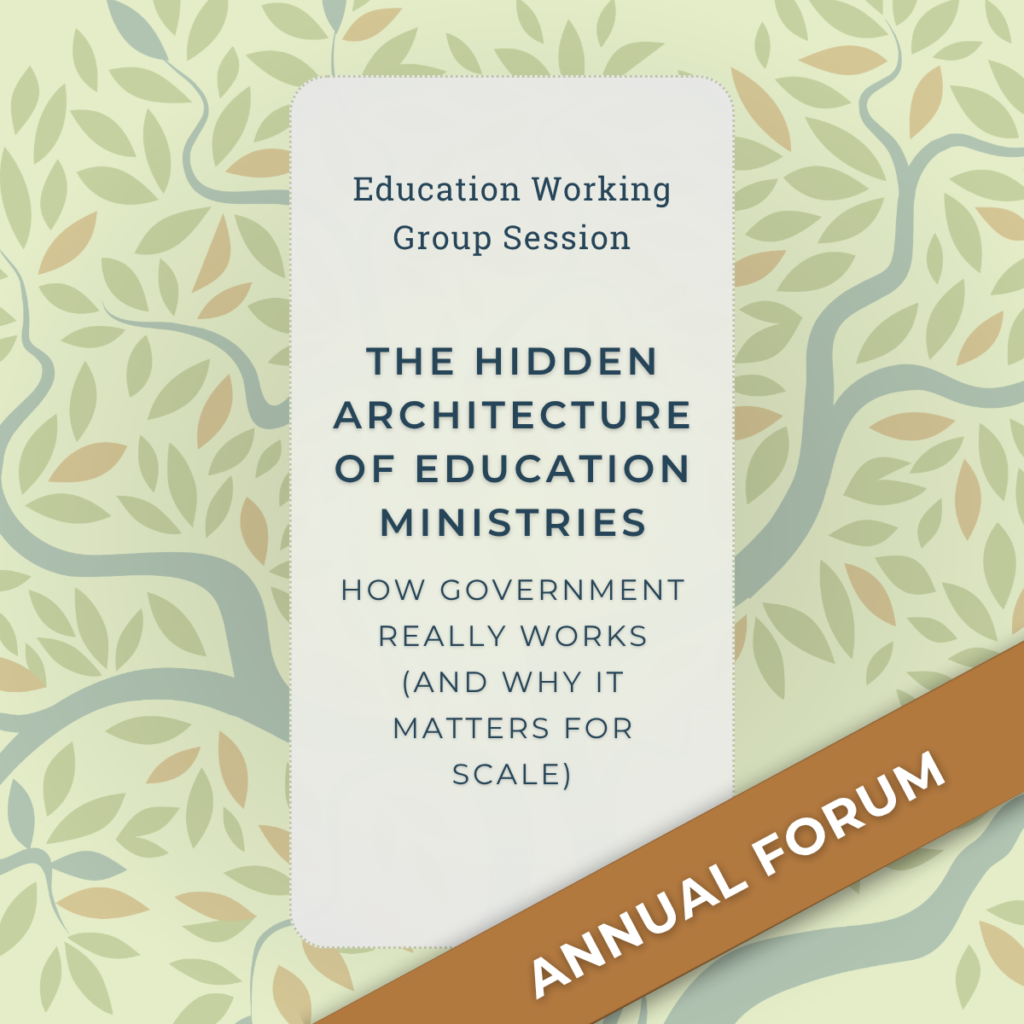
Session Blurb Speakers Recording Additional Resources Across Africa, education innovators, funders, and implementers increasingly agree that government adoption is the only credible pathway to scale. Yet most sector conversations still treat “government” as a black box—engaged at moments of approval rather than understood as a complex system with its own incentives, constraints, and decision-making rhythms. As bilateral aid contracts and governments become the primary stewards of education reform, this gap in understanding has become one of the biggest barriers to ...
Elimu-Soko is pleased to launch the Teaching Innovation Lab, in collaboration with the Gates Foundation. The Lab will pilot and scale evidence-based, cost-effective interventions for teacher training. This won’t be just another initiative; it will be an opportunity to scale evidence-based, cost-effective innovations within public education systems across Africa. The wake-up call: The funding landscape has fundamentally shifted in the last twelve months. With major donors reducing billions in Official Development Assistance (ODA) to education, the era of externally-funded programs ...
Education development stands at a critical crossroads. Official development assistance (ODA) for education is expected to drop by $5 billion, from its record high of $16.6 billion in 2022. While private philanthropy can step in to close some of this gap, its total contribution will need to increase significantly from the current $607 million it spends on education today. Moreover, any increases in education spending will need to compete with other sectors such as health that are also facing similar ...
Since 2009 the Centre for Girls' Education (CGE) in Nigeria has made significant strides in advancing girls’ education, particularly in Northern Nigeria, where cultural and socio-economic barriers often hinder educational access. CGE implements community-based interventions aimed at increasing enrollment and retention among girls ages 4-24. The program's holistic approach—incorporating mentorship, scholarships, and community engagement—has fostered a supportive environment for girls to pursue their education. Notably, initiatives such as the Life Skills component of the Adolescent Girls Initiative for Learning and ...
Description With the 2015 formal approval of the Sustainable Development Goal (SDG) 4.1.1 on education quality, governments are grappling with the most cost effective and sustainable way to measure minimum proficiency levels in reading and mathematics for children in primary and secondary school. A wide array of reading and math testing tools exist, many of which are too expensive for ministries of education to scale at a national level. Moderated by Lisa Slifer-Mbacke, Co-Chair of Education Working Group of the ...