Scaling challenges are increasingly recognized as complex, systemic, and rarely solvable by single actors or linear approaches. As a result, development organizations are moving away from viewing scaling as a process of simple expansion or replication, and toward acknowledging that many scaling challenges require multiple organizations working together, through diverse and complementary pathways, to achieve durable impact.
Within contemporary development discourse, scaling has evolved beyond notions of reach or growth to encompass how interventions, practices, and ideas circulate, adapt, and become embedded across varied contexts while retaining their core intent. Rather than being assessed solely by numbers reached, scaling increasingly concerns the processes through which innovations are institutionalized within governance systems, market structures, and social relations—foregrounding sustainability, adaptability, and ownership over size alone.
This shift has taken on renewed significance in a policy and development landscape shaped by fiscal constraints, institutional fragility, and widening social and ecological divides. Scaling efforts now require navigating complex political economies, aligning with uneven capacities, and responding to diverse local realities. Consequently, scaling is no longer understood as a normative trajectory from pilot to replication, but as a dynamic, nonlinear process shaped by learning, iteration, negotiation, and coordination among multiple actors.
This session positions scaling as a critical lens for engaging with these contemporary global conditions, where demand for impact often exceeds available resources. It advances a plural approach that brings together technical rigor and social capital, formal systems and informal institutions, evidence-driven frameworks and contextual responsiveness. Such a framing invites reflection on how scaling processes can remain inclusive, resilient, and ethically grounded, rather than narrowly focused on expansion.

Johannes Linn
Co-founder & Co-chair
Scaling Community of Practice
Bio
Johannes F. Linn is a Non-resident Senior Fellow at the Brookings Institution, a Distinguished Resident Scholar at the Emerging Markets Forum in Washington, D.C., a Senior Fellow at the Results for Development Institute and a Senior Research Fellow at the International Initiative for Impact Evaluation. He is co-founder and co-chair of the international Scaling Community of Practice. He currently serves as Global Facilitator for the Systematic Observation Financing Facility (SOFF) of the World Meteorological Organization (WMO). From 2005-2010 he was Director of the Wolfensohn Center for Development at the Brookings Institution in Washington, DC. Before that, he worked for three decades at the World Bank, including as Vice President for Financial Policy and Resource Mobilization and as Vice President for Europe and Central Asia. He holds a bachelor degree from Oxford University and a doctorate in economics from Cornell University.

Anamika Priyadarshini
Associate Professor of Legal Practice & Director
O. P. Jindal Global University
Bio
Dr. Anamika Priyadarshini is a political economist specializing in gender & development. Her scholarship interrogates the intersections of development processes, gender relations, and social reproduction, with a focus on how these dynamics influence the everyday lives of last-mile communities, particularly women. With over two decades of experience as an academic and practitioner, she brings a distinctive perspective that bridges feminist political economy, critical development studies, and grounded field practice. Dr Priyadarshini holds a Master’s in International Development from Cornell University and a PhD in Global Gender and Sexuality Studies from the State University of New York at Buffalo. Dr Priyadarshini has taught courses on gender & development, women’s work, gender & migration, development theory, and research methodology at institutions such as SUNY Buffalo, Central University of South Bihar and Tata Institute of Social Sciences. She has also led research supported by the Indian Council of Social Science Research, the Gates Foundation, the World Bank, and other global and national institutions. Her teaching and research are grounded in feminist epistemologies, interdisciplinary inquiry, and a strong commitment to linking theory with praxis. A recipient of the Ford Foundation Fellowship and the Margaret McNamara Education Grant (MMEG), she has published in leading journals and volumes, including eClinical Medicine (The Lancet Discovery Science), Brill, and Social Change. She has been featured in MMEG’s series on Exceptional Women Building a Better World. and interviewed by eClinical Medicine for its podcast Renewed Call for Action: Collection on Gender Inequality.
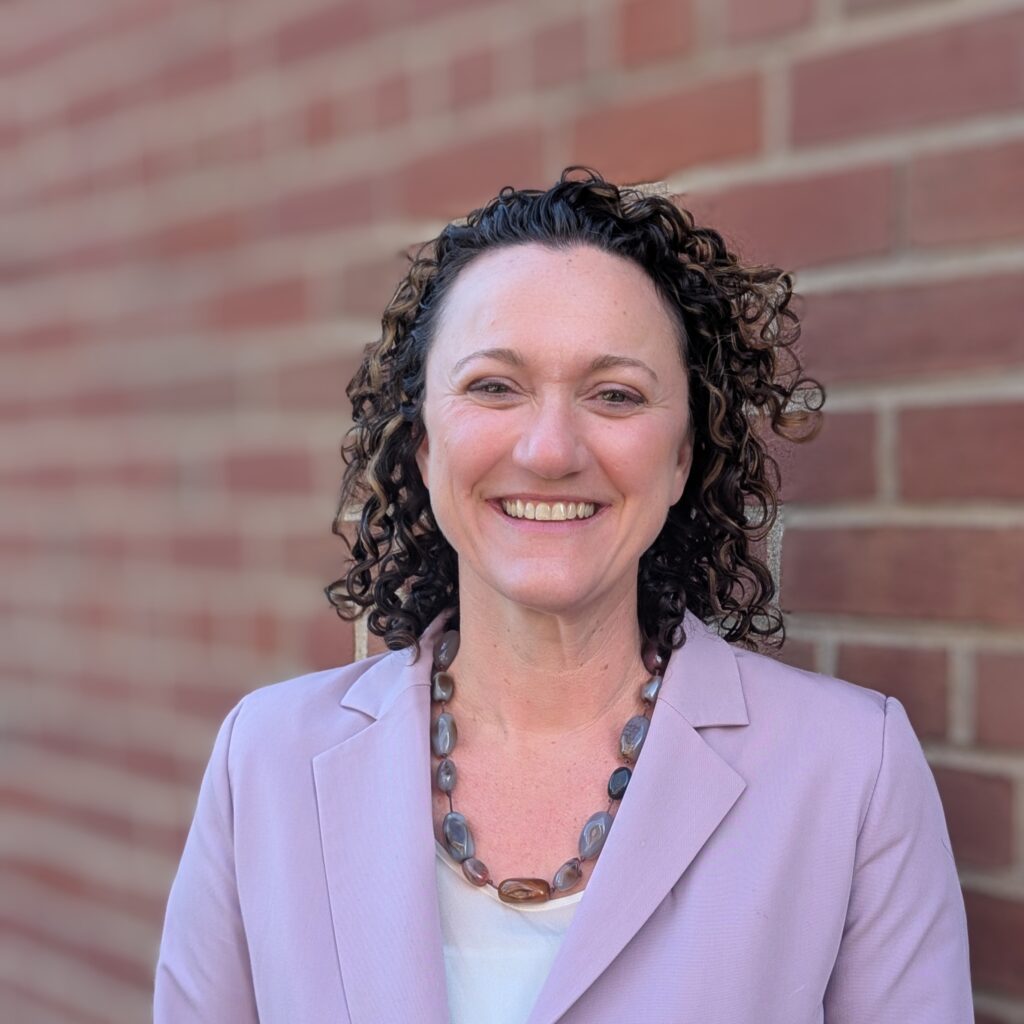
Ann Vaughan
Associate Vice President, Resilient Futures
CARE
Bio
Ann Vaughan is the Associate Vice President, Resilient Futures for CARE. In this role she helps advance partnerships and programs that support CARE’s work to help 25 million people become more climate resilient and unlock climate finance for development that supports women, girls, boys and men. She previously served as a Deputy Assistant Administrator of the Bureau for Resilience, Environment and Food Security at USAID, helping to oversee Feed the Future, the US government’s global food security initiative. From 2021-2023, Ann helped create and lead the President’s Emergency Plan for Adaptation and Resilience (PREPARE), a whole government initiative to help 500 million people become more resilient to the impacts of climate change. Prior to joining USAID, Ann oversaw a global flood resilience alliance, led advocacy efforts at Mercy Corps where she advanced legislation on food security and global fragility, served as a field officer for USAID in Kandahar, Afghanistan and was a foreign aid Appropriations Associate for US Congresswoman Nita Lowey. She started her international development career as a Peace Corps Volunteer in Quilali, Nicaragua. She has her Master’s in International Development Studies with a focus on post-conflict reconstruction from George Washington University and Undergraduate degree from the College of William and Mary.

Esther Kihoro
Researcher, Science and Practice of Scaling
CGIAR
Bio
Esther Kihoro is a recognised researcher and scaling practitioner with over 15 years of experience in agriculture, gender, climate change, and rural development. Her work focuses on translating research into impact by strengthening systems, partnerships, and capacities for scaling innovations across agri-food systems in the Global South.
At the CGIAR Impact at Scale Platform hosted at ILRI, Esther leads the Scaling Fund, which supports innovation teams to design, test, and implement robust scaling strategies through targeted funding, technical backstopping, and learning. The Fund also serves as a living laboratory, generating empirical insights that feed into the Science of Scaling—advancing CGIAR’s understanding of how scaling can be achieved responsibly, inclusively, and efficiently.
Esther has been instrumental in building the Science and Practice of Scaling collaboration between CGIAR and Wageningen University, and in growing a vibrant science of scaling community within and beyond CGIAR. She fosters joint research, capacity development, and institutional learning, while mentoring the next generation of scaling experts. Her work also advises programs and partners on responsible scaling approaches, and she has led multi-country initiatives embedding scaling principles into research and innovation systems.
A strong advocate for systems thinking and co-learning, Esther’s work bridges research, policy, and practice—helping shape how scaling science informs global efforts toward sustainable agricultural transformation and impact at scale. She holds a PhD in Knowledge Technology and Innovations from Wageningen University and Research.
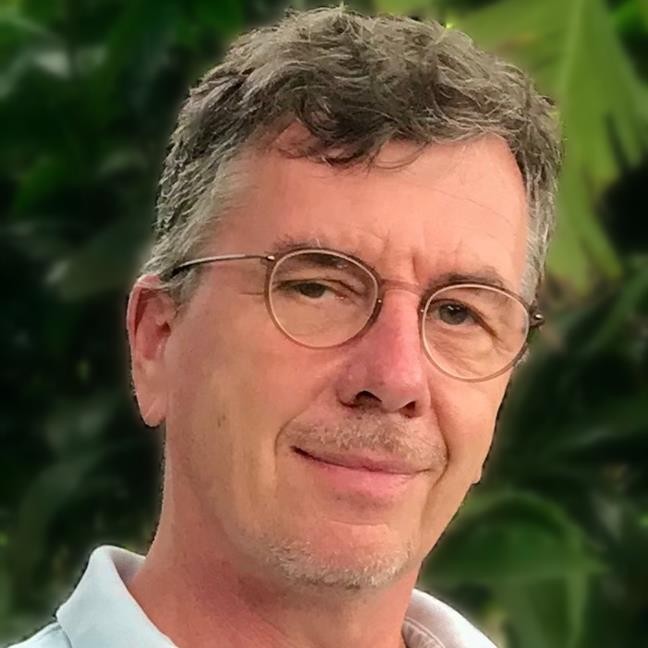
Michael Duerr
Project Manager
GIZ
Bio
Michael Duerr is an agricultural economist by training and has been working in development cooperation throughout his career. Before returning to Germany to work at GIZ HQ, he was based in East Africa for a prolonged period of time. Michael Duerr currently heads SCALE, a German ODA-funded initiative providing support for scaling of agricultural innovations. Based on the conviction, that collaborative action is needed to achieve transformative, sectoral impact, he engaged with other founding members to establish the Scaling Coalition.