This interactive webinar will explore the potential of country platforms as vehicles to accelerate and scale climate and development action, building on recent momentum (e.g., the launch of a Country Platforms Hub at COP30) while taking an honest look at the challenges that could limit their full impact. Drawing on perspectives from expert speakers working across finance, policy, and implementation, the session will examine what country platforms are achieving in practice and where gaps remain. Through a frank, solutions-oriented discussion, we will discuss the critical factors – such as governance, incentives, coordination, financing structures, and delivery capacity – that must be in place for country platforms to move from ambition to sustained, scalable results.
The session has three broad learning goals:
- Critically assess the added value of country platforms for scaling climate action, including when they work, when they don’t, and what gaps remain compared to other coordination models.
- Explore how donors, multilaterals, governments, and development banks can collaborate within country platforms to align priorities, mobilize finance, and avoid duplication or fragmentation.
- Identify actionable steps and enabling conditions (e.g., governance, incentives, data systems, and financing mechanisms) that can make country platforms more effective drivers of country-led climate impact.

Karin Kemper
Senior Advisor & Climate Change Working Group Co-chair
Scaling Community of Practice
Bio
Karin Kemper – Former Global Director for the Environment, Natural Resources and Blue Economy Global Practice at the World Bank, and SCoP Senior Advisor and co-Chair of the Climate Change Working Group of the SCoP, with extensive leadership experience on climate policy, natural resource management, and sustainable development.

Johannes Linn
Co-founder & Co-chair
Scaling Community of Practice
Bio
Johannes F. Linn is a Non-resident Senior Fellow at the Brookings Institution, a Distinguished Resident Scholar at the Emerging Markets Forum in Washington, D.C., a Senior Fellow at the Results for Development Institute and a Senior Research Fellow at the International Initiative for Impact Evaluation. He is co-founder and co-chair of the international Scaling Community of Practice. He currently serves as Global Facilitator for the Systematic Observation Financing Facility (SOFF) of the World Meteorological Organization (WMO). From 2005-2010 he was Director of the Wolfensohn Center for Development at the Brookings Institution in Washington, DC. Before that, he worked for three decades at the World Bank, including as Vice President for Financial Policy and Resource Mobilization and as Vice President for Europe and Central Asia. He holds a bachelor degree from Oxford University and a doctorate in economics from Cornell University.

Matthew Eldridge
Climate Change Working Group Co-chair
Scaling Community of Practice
Bio
Matthew Eldridge is a climate and development finance advisor at the Gates Foundation, where he focuses on building finance partnerships to scale investment in climate-resilient food system solutions. Previously, he served as a Senior Program Officer at Gates, leading a portfolio on climate finance policy and macroeconomics. Prior to joining the Foundation, he led research on innovative finance and public financial management at the Urban Institute, consulted on banking and asset management policy, and worked at the World Bank on aid effectiveness and supporting the Central Asia portfolio.
Alexia Latortue
Distinguished Non-Resident Fellow
Center for Global Development
Bio
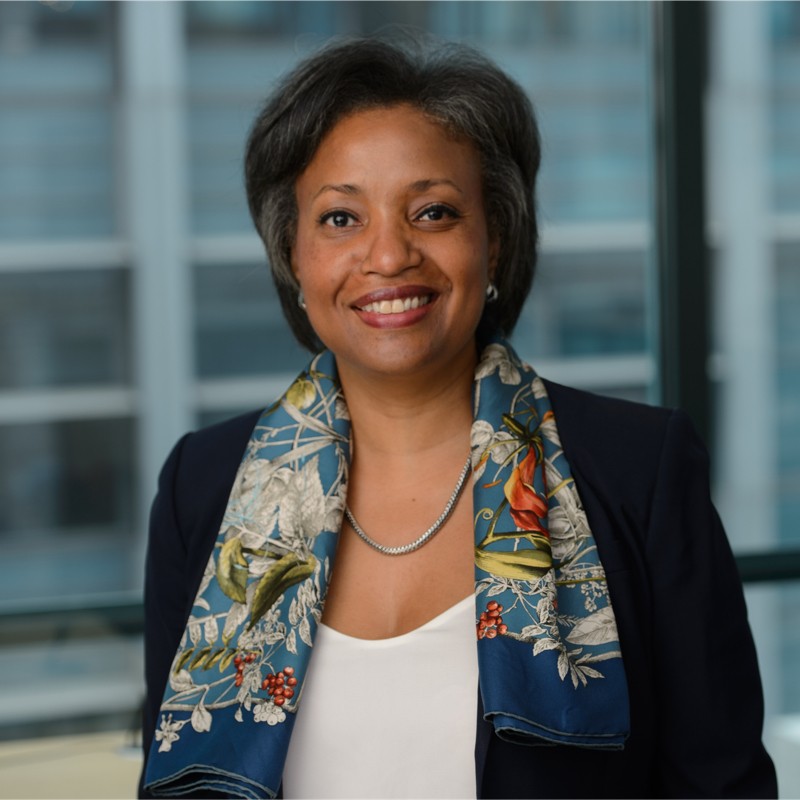
Alexia Latortue is a Distinguished Non-Resident Fellow at the Center for Global Development. Most recently, she served as the Senate-confirmed Assistant Secretary for International Trade and Development at the US Department of the Treasury under the Biden-Harris Administration. In this role, she was the top policy advisor on climate, environment, and infrastructure; development finance and policy; trade and investment; and technical assistance. Alexia conceptualized and led the implementation of an initiative to evolve the multilateral development banks to be fit for purpose to help countries address 21st-century global challenges. She also spearheaded a strategy to use public finance to mobilize private capital into emerging markets. This was Alexia’s second tenure at Treasury, having previously served under the Obama-Biden Administration as Principal Deputy Assistant Secretary for International Development Policy.
Previously, Alexia was the Millennium Challenge Corporation’s Deputy CEO and Managing Director for Corporate Strategy and served on the Executive Committee of the European Bank for Reconstruction and Development (EBRD), where she drove a new strategy focused on climate, inclusion, and digital solutions, and led work preparing for an incremental expansion into Sub-Saharan Africa. Earlier, Alexia spent ten years at the World Bank working on financial inclusion, culminating in her role as Deputy CEO of CGAP. She has also held positions in private sector development, including with Development Alternatives, Inc.
Alexia received her M.A. from The Fletcher School of Law and Diplomacy at Tufts University and her B.S. from Georgetown University. She serves on the boards of Suez and ODI Global and is a Special Advisor to the Trade and Development Bank Group.
Josué Tanaka
Visiting Professor in Practice
London School of Economics’ Grantham Research Institute
Bio
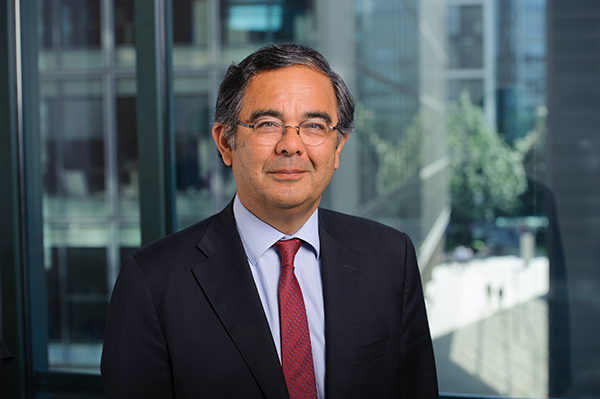
Josué Tanaka is the founding leader of the European Bank for Reconstruction and Development (EBRD) climate finance initiative launched in 2006 covering investment, policy development, capacity building and technical assistance across the EBRD countries of operations. He was the Managing Director responsible for climate action and operational strategy and planning at the EBRD until December 2020. Under his leadership, green finance reached 46% of total EBRD investment in 2019 with cumulative EBRD green finance since 2006 reaching over USD 42 billion in close to 2,000 climate change mitigation and adaptation projects with total project value of over USD 260 billion (64% in private sector).
Josué has worked on development and environmental matters for close to 40 years starting in Brazil and at the World Bank before joining the EBRD at its inception in 1991. His sectoral experience covers urban environmental infrastructure, energy efficiency and climate finance. He developed major programmes such as the Green Economy Transition approach of the EBRD and the Environmental Program for the Mediterranean at the World Bank. His work involved policies and projects in Eastern Europe, Middle East and North Africa, Brazil and Madagascar. He has an in-depth knowledge of the multilateral development banking system having worked in senior positions covering strategic, operational and financial functions. Josué holds a PhD and an MSc from the Massachusetts Institute of Technology and a BSE from Princeton University.

Felipe Borsato da Silva
Climate Finance Investment Manager
Banco Nacional de Desenvolvimento Econômico e Social (BNDES)
Bio
Senior development finance professional at the Banco Nacional de Desenvolvimento Econômico e Social (BNDES) and the secretariat of the Brazil Climate and Ecological Transformation Investment Platform (BIP).
Amar Bhattacharya
Senior Fellow
The Brookings Institution
Bio
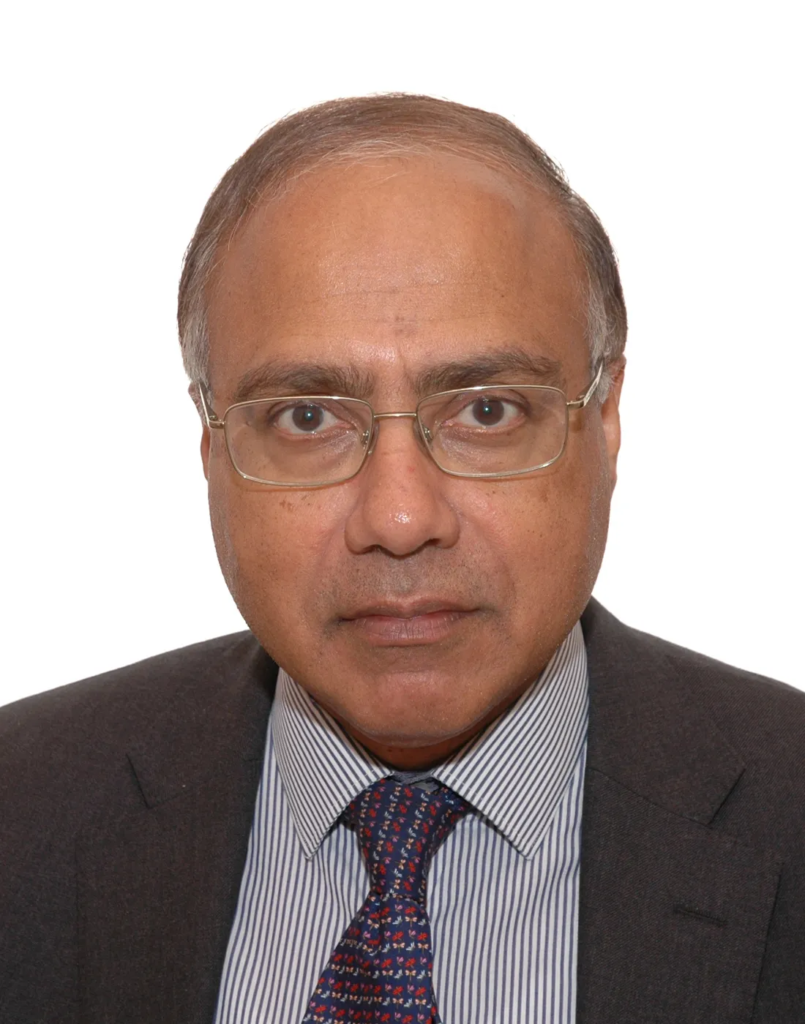
Amar Bhattacharya is a senior fellow in the Center for Sustainable Development, housed in the Global Economy and Development program at Brookings. His focus areas are the global economy, development finance, global governance, and the links between climate and development.
From April 2007 until September 2014 he was Director of the Group of 24, an intergovernmental group of developing country Finance Ministers and Central Bank Governors. In that capacity he led the work program of the Group, supported the deliberations of the Ministers, and was the principal point of interface with other organizations including the G20. He has therefore been an active participant in the global economic discussions and a key representative of the views of developing countries. Prior to taking up his position with the G24, Mr. Bhattacharya had a long-standing career in the World Bank. His last position was as Senior Advisor and Head of the International Policy and Partnership Group. In this capacity, he was the focal point for the Bank’s engagement with key international groupings and institutions such as the G7/G8, G20, IMF, OECD and the Commonwealth Secretariat.
Through these different positions Mr. Bhattacharya has had a long standing engagement in research and policy discussions on the global economy and spillovers, international financial architecture, development financing and the global governance agenda including on the role and reform of the international financial institutions. He completed his undergraduate studies at the University of Delhi and Brandeis University and his graduate education at Princeton University.